
Embrace Sophistication: Your Traditional Gray Dining Room
A traditional dining room offers a sanctuary for gatherings, designed for comfort and enduring style. When paired with the versatility of gray, this classic aesthetic becomes both refined and inviting, suitable for any occasion, all year round. At Paper & Frill, we specialize in helping you achieve a cohesive look with our coordinated wallpaper and fabric designs, making it simple to infuse your dining space with bespoke charm.
Gray, in its myriad tones, acts as a sophisticated neutral, allowing rich textures and subtle color accents to shine. Let’s explore how to layer our exclusive designs to create a traditional gray dining room that feels both grand and intimate.
Setting the Foundation: Walls and Windows
The walls are your canvas, and choosing the right treatment sets the room’s entire mood. For a truly refined backdrop, consider a soft, warm gray paint for the majority of your walls, such as Farrow & Ball’s ‘Pavilion Gray’ or Benjamin Moore’s ‘Stonington Gray’, creating a serene base. Trim and ceiling painted in a crisp off-white like Farrow & Ball ‘Wimborne White’ will add definition.
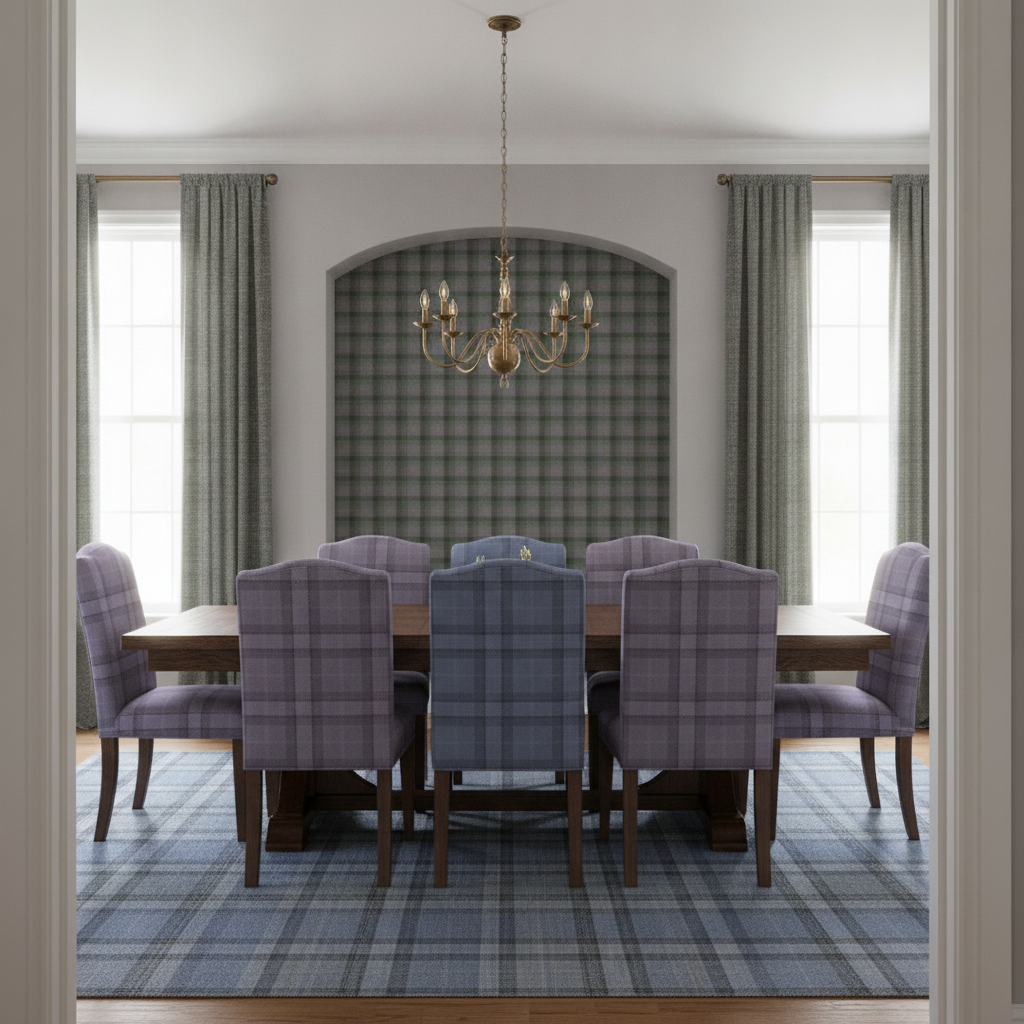
To introduce visual interest and a sense of heritage, designate a feature wall or an alcove for wallpaper. The Fraser Weathered Wool Scottish Tartan with Forest Green and Slate Gray Acce wallpaper is an excellent choice. This design features a rich forest green and slate gray tartan, subtly highlighted by thin teal lines, providing a classic, weathered look. For a standard alcove measuring 1 meter wide and 2.5 meters high, you would typically need one roll of this wallpaper, allowing for potential pattern repeat matching. Ensure your wall is clean, dry, and smooth before application to achieve a flawless finish.
Complementing this feature wall, dress your windows with curtains crafted from the matching Fraser Weathered Wool Scottish Tartan with Forest Green and Slate Gray Acce fabric. For a window measuring 1.5 meters wide and 2.2 meters high, a pair of full-length, interlined curtains would require approximately 11-12 meters of fabric (accounting for a generous pattern repeat and heading/hem allowances). Hang your curtain rod 15-20 cm above the window frame, extending 20-30 cm beyond each side, and ensure the curtains finish 1 cm above the floor for an elegant drape.
For windows where full curtains might feel too heavy, or for a simpler, tailored look, a Roman blind in Connecticut Slate Gray Classic Neutral fabric offers a refined alternative. This design is a sophisticated slate gray, inspired by Connecticut stone and colonial charm. A Roman blind should finish 1 cm above the windowsill when fully lowered, providing a clean, architectural line. This same Connecticut Slate Gray Classic Neutral fabric could also be used for tailored seat covers on your dining chairs, offering a subtle, consistent neutral that anchors the room.
Layering Textures: Upholstery and Linens
Introduce warmth and depth through your choice of upholstery and soft furnishings. Dining chairs are a prime opportunity to showcase a patterned fabric. For a welcoming, cozy feel, consider upholstering your dining chair seats in Muted Violet and Heather Gray Wool-Style Tartan Plaid Fabric. This soft gray plaid, with its subdued violet tones and wool-like texture, adds a touch of vintage charm without overwhelming the space. Each standard dining chair seat (approx. 50x50cm) typically requires around 0.75 meters of fabric, allowing for pattern placement and secure fitting.
Alternatively, for a slightly richer, more robust look, the Denim Blue and Steel Gray Wool-Texture Tartan Plaid Fabric, with its blend of denim blue and steel gray, provides a cozy wool texture perfect for traditional decor. This fabric would also be excellent for a banquette cushion, providing both comfort and style. For a banquette, scatter cushions can enhance comfort and visual appeal; use sizes like 45x45cm squares or 50x30cm lumbar cushions, spaced approximately every 60-75cm for a balanced look.
Table linens, while often overlooked, contribute significantly to the dining room’s aesthetic. A table runner crafted from the Connecticut Slate Gray Classic Neutral fabric can add a touch of understated elegance. For an island or dining table up to 1.8 meters wide, a runner of 40-45 cm width typically works best, allowing it to frame place settings without being too bulky. Remember that thoughtful details like aged brass light fixtures, brushed nickel curtain rods, or matte black cabinet pulls will further enhance the traditional feel.
A Touch of Cohesion: The Power of Matching Patterns
One of Paper & Frill’s unique strengths is the ability to offer a perfectly matched print as both wallpaper and fabric. This allows for a truly cohesive design narrative within your room. Imagine a charming window seat alcove: the walls are papered in a design, and the seat cushion is made from the exact same pattern. This deliberate coordination creates a bespoke, designer-level finish that elevates the entire room.
Step-by-Step: Crafting a Coordinated Corner
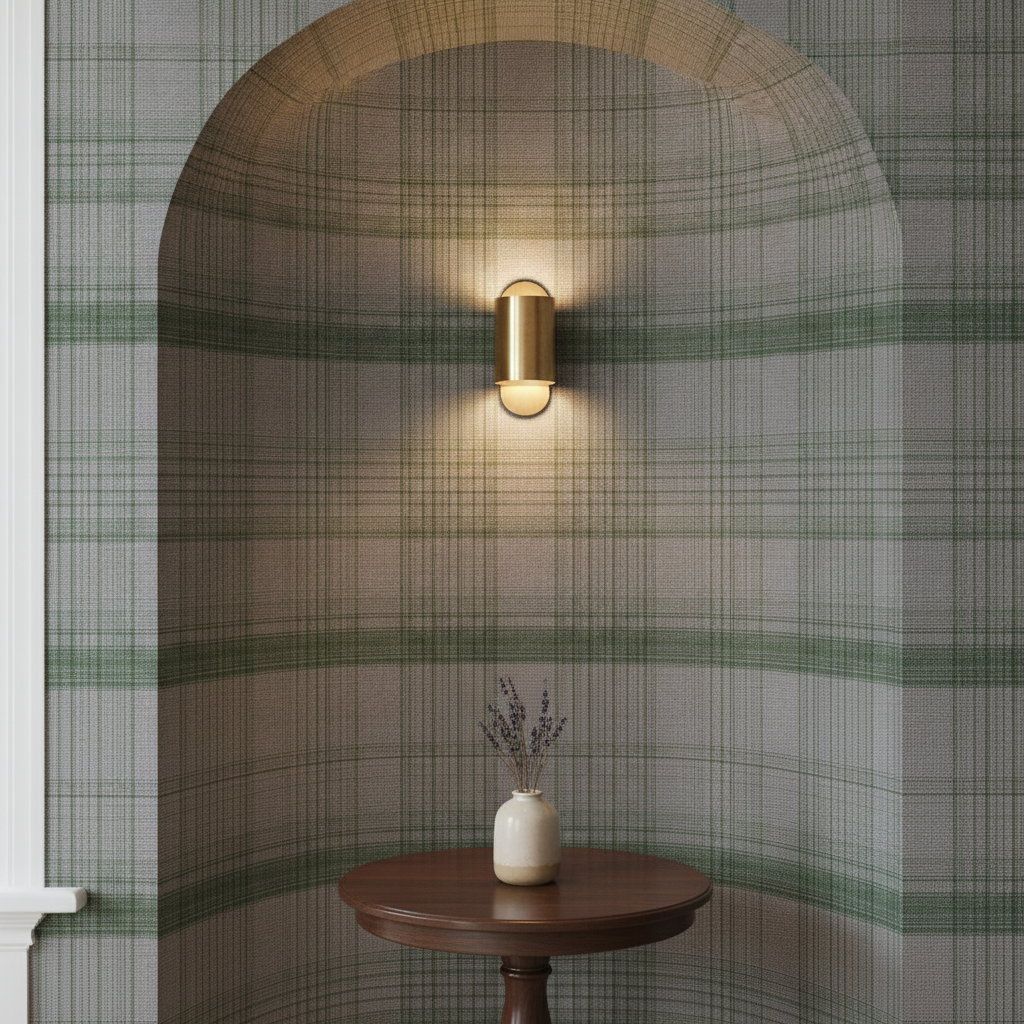
Here’s how to create a small, coordinated vignette using the Denim Blue and Steel Gray Wool-Texture Tartan Plaid print:
- Prepare Your Alcove: Ensure the alcove walls are clean, dry, and smooth. Fill any holes or cracks, sand lightly, and prime if necessary for optimal wallpaper adhesion.
- Measure and Order Wallpaper: Measure the width and height of the alcove. For a typical 1.2m wide by 2.5m high alcove, you will need 2 rolls of Denim Blue and Steel Gray Wool-Texture Tartan Plaid wallpaper, accounting for the pattern repeat to ensure seamless matching.
- Install Wallpaper: Following the manufacturer’s instructions, hang the wallpaper, carefully matching the denim blue and steel gray plaid pattern at each seam. Pay attention to corners and edges for a neat finish.
- Craft Your Cushion: For a window seat cushion measuring 1.2m wide by 0.5m deep, you’ll need approximately 2 meters of the coordinating Denim Blue and Steel Gray Wool-Texture Tartan Plaid fabric. Cut two pieces for the top and bottom, and strips for the sides, ensuring the plaid pattern aligns.
- Assemble and Finish: Sew your cushion cover, insert appropriate foam, and add a zipper or ties. Place it in the freshly papered alcove for a perfectly unified, inviting space.
What to Avoid in Your Gray Traditional Dining Room
- Overly Cool Grays: While gray is sophisticated, an abundance of cool-toned grays without warm accents (like wood, aged metals, or warmer grays) can make a room feel sterile or unwelcoming.
- Ignoring Texture: A flat room lacks interest. Incorporate varied textures through wool-like fabrics, polished wood, woven rugs, and smooth ceramics to add depth.
- Too Much Matchy-Matchy: While matching fabric and wallpaper from Paper & Frill creates cohesion, avoid matching every single element. Introduce different patterns or solids that complement, rather than duplicate, your main designs.
- Insufficient Lighting: A dining room needs layered lighting. Relying solely on a single overhead fixture can create harsh shadows. Combine a central chandelier (like one in aged brass) with wall sconces or table lamps on a console for ambient glow and task lighting.


