
Creating a Serene Cream Cottagecore Nursery
Designing a nursery offers a unique opportunity to craft a truly special space. For parents seeking a calming and inviting atmosphere that feels both fresh and nostalgic, a cream cottagecore nursery is an ideal choice. This style leans into natural textures, soft tones, and a gentle aesthetic, providing a peaceful haven for your baby without being overly themed or cluttered. With cream as the unifying colour, the room maintains an airy feel while embracing warmth and comfort.
The Foundation: Cream Walls and Natural Light
Start with your wall colour. A warm, inviting off-white sets the perfect backdrop for a cottagecore nursery. Consider a shade like Farrow & Ball’s "Wimborne White" for its soft, creamy undertones that prevent the room from feeling stark. Apply this same colour to the ceiling and trim for a cohesive, seamless look that expands the sense of space. Embrace natural light by keeping window treatments simple yet effective.
Textural Harmony with Micro Coal Black Antique Vintage Mattress Ticking Stripe on Cream
The essence of cottagecore lies in its understated charm and use of classic patterns. Our Micro Coal Black Antique Vintage Mattress Ticking Stripe on Cream fabric, with its micro coal black antique vintage mattress ticking stripe on cream, is a perfect fit. This fabric, tagged as antique, classic, and cottagecore, offers a timeless touch without overwhelming the gentle cream palette. Its subtle striped motif introduces visual interest and a sense of heritage.
Primary Use: A Roman Blind for Soft Light Control
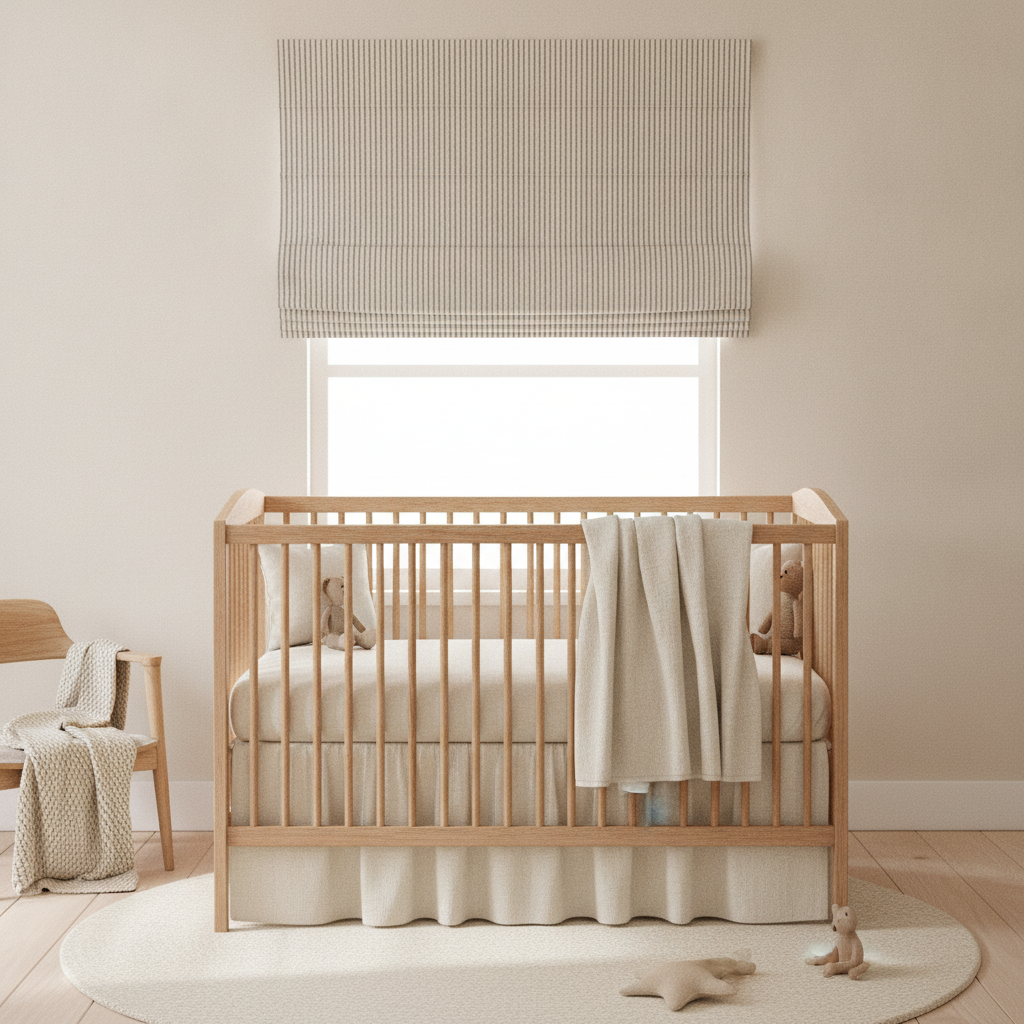
Employ this fabric for a Roman blind on the nursery window. A Roman blind provides excellent light control, allowing for soft, filtered light during the day and complete darkness for naps. For a standard window measuring 90 cm wide by 120 cm high, the finished blind should cover the window frame, typically finishing at about 125 cm in drop. You would require approximately 1.8 meters of fabric (assuming a standard fabric width of 140 cm) to account for seam allowances, rod pockets, and top/bottom hems. The micro stripe ensures that the pattern remains delicate, even when gathered.
Secondary Use: A Custom Changing Pad Cover
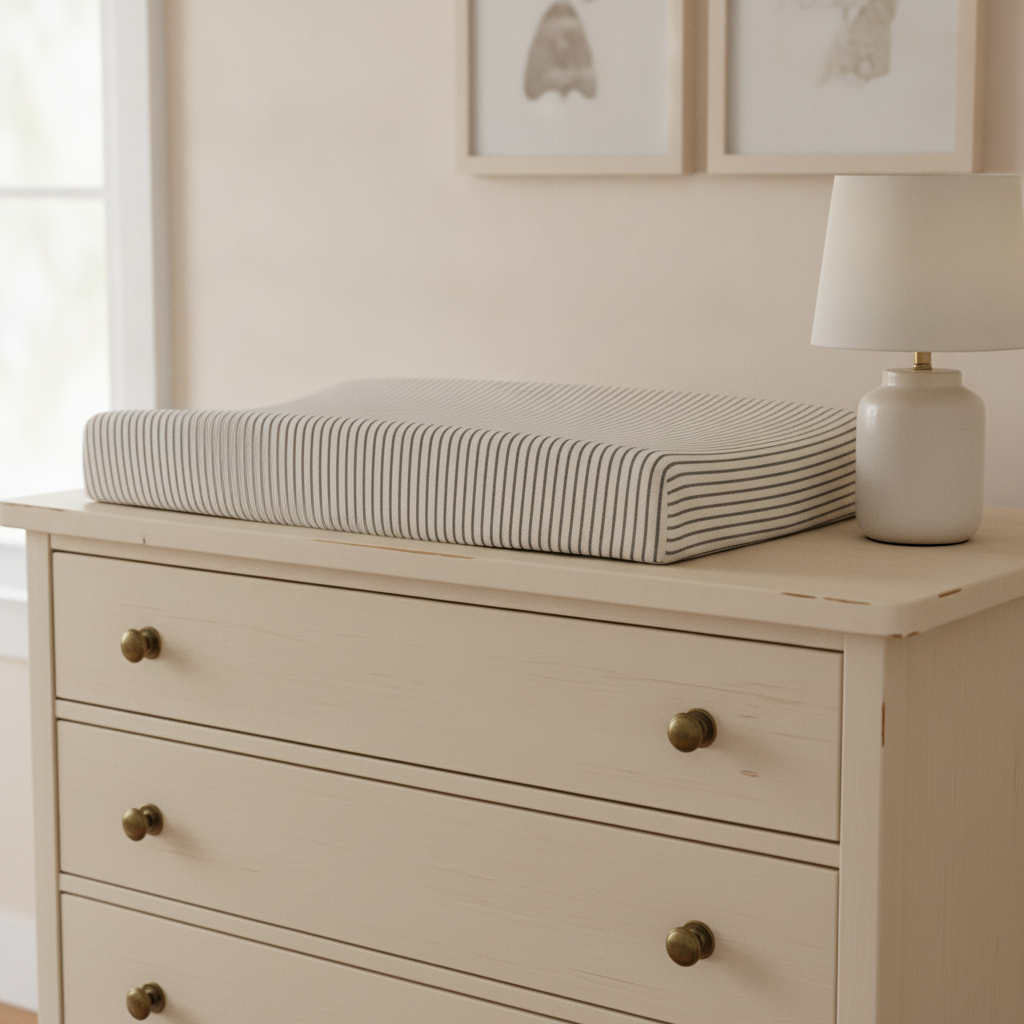
Extend the charm of this ticking stripe by crafting a custom changing pad cover. The durable nature of mattress ticking makes it suitable for everyday use, and the cream and micro coal black stripe adds a touch of bespoke detail to a functional item. You’ll need about 1 meter of fabric for a standard 40 cm x 80 cm changing pad, accounting for depth and elastic casing.
Furniture and Finishes: A Blend of Vintage and Practical
Opt for furniture with gentle curves and a natural finish. A wooden crib in a light, natural oak or a vintage dresser painted in a shade matching "Wimborne White" would be ideal. Hardware can make a significant difference; swap out any modern pulls for aged brass knobs or cup handles. For example, solid brass pulls with an aged finish add warmth and character to a dresser or wardrobe.
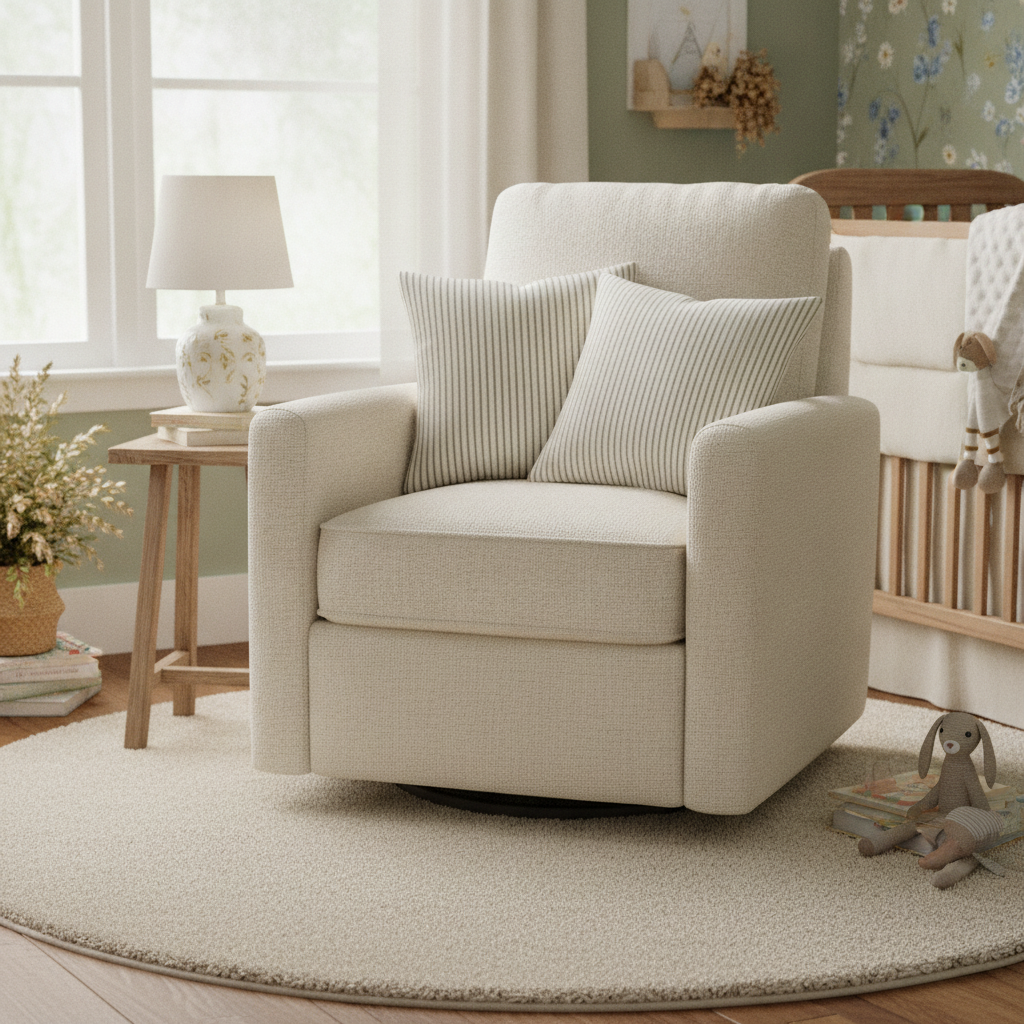
A comfortable glider or armchair is essential for a nursery. Dress it with soft cushions made from our Micro Coal Black Antique Vintage Mattress Ticking Stripe on Cream fabric. Two cushions, each measuring 45 cm x 45 cm, placed approximately 30 cm apart on the glider, will provide both comfort and visual continuity. Each cushion typically requires about 0.5 meters of fabric for an envelope-style cover.
Bringing in the Details: Warmth and Whimsy
Layering textures is key to cottagecore. Introduce a plush cream wool rug, or a natural jute rug for grounding the space. Consider open shelving with woven baskets for toy storage, adding to the room’s organic feel. For lighting, choose fixtures that emit a warm glow. A pendant light with a fabric shade (perhaps in a cream linen) centered over the crib area, combined with a small bedside lamp on the dresser with a ceramic base in a muted tone, provides ambient and task lighting. Ensure all lighting is on dimmers for gentle transitions.
Accessories should be simple and heartfelt. Display a few framed botanicals or gentle watercolour animal prints in light wood frames. A small collection of wooden toys on a shelf or tucked into a woven basket reinforces the natural aesthetic. A small dried flower arrangement of lavender or eucalyptus adds a subtle fragrance and a touch of the outdoors.
Your Step-by-Step Guide: Crafting a Ticking Stripe Cushion Cover
Give your nursery glider a personal touch by sewing a simple envelope-style cushion cover using our Micro Coal Black Antique Vintage Mattress Ticking Stripe on Cream fabric. This project is perfect for beginners and adds a bespoke element to the room.
- Measure and Cut Fabric: For a 45 cm x 45 cm cushion insert, cut one front piece measuring 47 cm x 47 cm (allowing for 1 cm seam allowance on all sides). For the back, cut two pieces, each 47 cm wide x 30 cm high.
- Hem Back Pieces: Along one 47 cm edge of each back piece, fold over 1 cm, press, then fold over another 2 cm, and press again. Stitch this hem in place to create a neat finished edge for the envelope opening.
- Assemble the Cover: Place the front piece right side up. Place one back piece right side down on top of the front, aligning the raw edges at the top. Place the second back piece right side down on top of the front, aligning the raw edges at the bottom. The two hemmed edges of the back pieces will overlap in the middle.
- Stitch the Edges: Pin all around the perimeter. Stitch with a 1 cm seam allowance around all four sides. Backstitch at the start and end of your seams for security.
- Finish and Turn: Trim the corners diagonally to reduce bulk. Turn the cushion cover right side out through the envelope opening. Push out the corners gently to create crisp points. Insert your 45 cm x 45 cm cushion.
What to Avoid: Common Missteps in a Cottagecore Nursery
- Stark White Paint: Avoid cold, brilliant white paints that can feel unwelcoming. Always opt for an off-white with warm undertones to maintain a soft atmosphere.
- Overly Themed Decor: While cottagecore has a distinct feel, resist the urge to fill the room with too many overtly "cute" or matchy-matchy items. Focus on textures and natural elements instead.
- Harsh Lighting: Bright, unshaded overhead lights can disrupt a calm environment. Prioritize soft, diffused light from multiple sources and always use dimmers.
- Synthetic Textures: Steer clear of shiny polyesters or plastics. Embrace natural materials like cotton, linen, wool, wood, and wicker to enhance the authentic cottagecore feel.
- Clutter: A serene space is an organized space. Incorporate storage solutions like woven baskets and closed cabinetry to keep toys and baby essentials neatly out of sight when not in use.


