A Recipe for Charm: Designing Your Vintage Blue Kitchen
Creating a kitchen that feels both fresh and steeped in history is a satisfying project. For Paper & Frill, we often see customers drawn to the timeless appeal of a vintage aesthetic, particularly when paired with the calming versatility of blue. A vintage blue kitchen is a space that invites lingering conversations and thoughtful meals, providing comfort without sacrificing style. Here’s how to build one with precision and character.
The Foundation: Soft Hues and Thoughtful Details
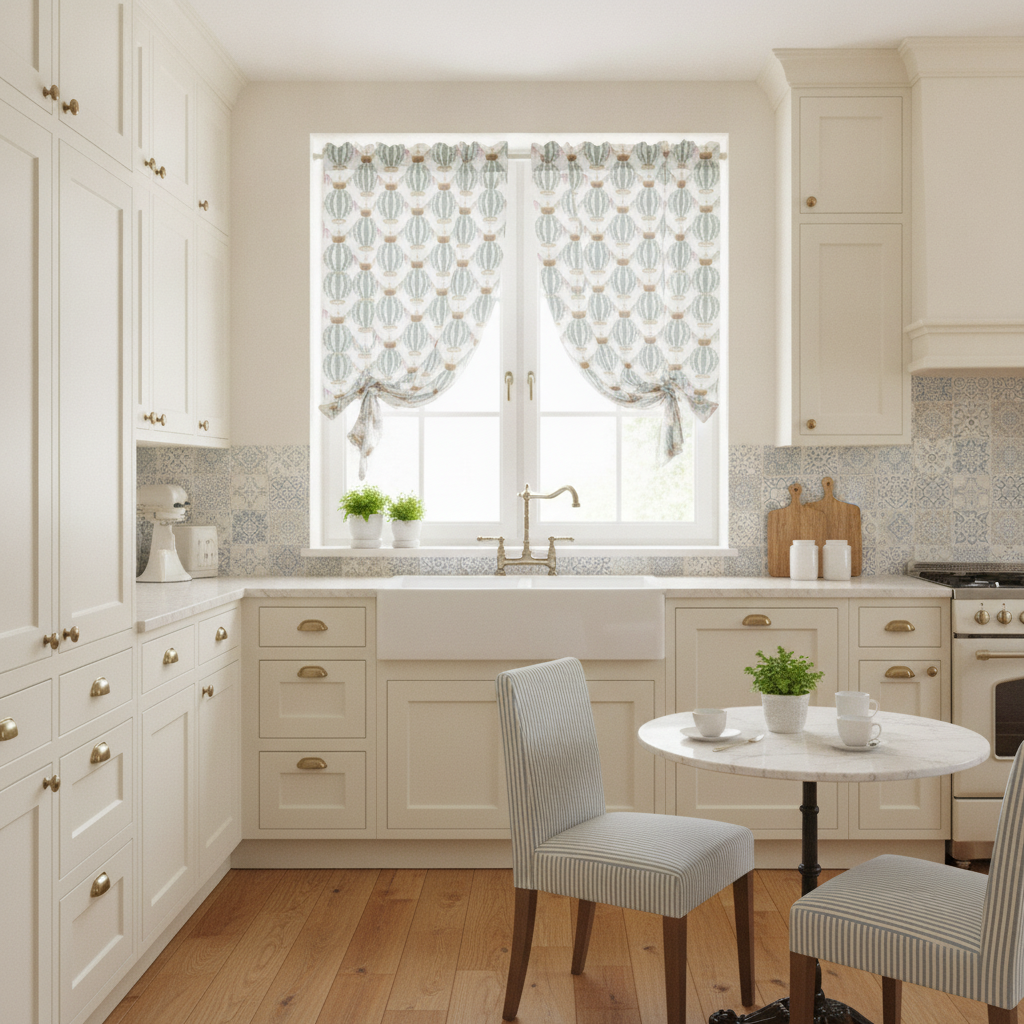
Start with a base that allows your blue elements to truly shine. For walls and cabinetry, avoid stark white, which can feel too modern. Instead, opt for a soft, creamy off-white like Benjamin Moore’s "Cloud White" OC-130 or Sherwin-Williams’ "Pure White" SW 7005. These shades offer warmth and a gentle backdrop. When selecting hardware, choose finishes that echo a bygone era: aged brass for a warm, traditional feel, or brushed nickel for a slightly cooler, yet still classic, touch. Door and drawer pulls in a cup pull style or simple knob add to the vintage authenticity.
Introducing Pattern and Texture
This is where our designs come in, bringing life and personality to your vintage blue kitchen. Thoughtful fabric choices can define the room’s atmosphere.
Window Treatments with Whimsy
Consider window treatments that provide privacy without blocking natural light. For a charming cafe curtain look, the Vintage Ornamental Blue Striped Hot Air Helium Balloons fabric is an excellent choice. This design features nineteenth-century stylized hot air balloons with tear-drop and globe shapes adorned with festoons, flags, sandbags, and banners, all in a distinct blue stripe. For a window 90cm wide, cut your fabric to 160-180cm wide to ensure ample fullness when gathered. Hang the curtain rod approximately halfway up the window, around 60cm from the sill, allowing the pattern to be fully appreciated while still letting light into the top half of the pane.
- **Primary Use:** Cafe curtains for a kitchen window. For a standard 90cm wide window, you’ll need two panels, each 80-90cm wide and 40-50cm long (plus hem allowances). Hang the rod 60cm from the sill.
- **Second Use Idea:** This whimsical fabric also makes excellent small decorative cushions for a breakfast nook banquette, or tailored kitchen tea towels for display.
Classic Stripes for Timeless Appeal
For a more tailored look, especially on larger windows or for cabinet inserts, the Traditional Micro Sky Blue Blue Vintage Ticking Upholstery Stripes fabric offers subtle sophistication. This fabric features micro sky blue and white mattress narrow ticking bed stripes in a vintage style, with narrow and thinner stripes alternating. It’s perfect for Roman blinds, providing clean lines that complement the vintage aesthetic.
- **Primary Use:** Roman blinds for kitchen windows. For a window measuring 120cm wide by 100cm high, you’ll need fabric cut to approximately 125cm wide and 120cm long (allowing for hems and rod pocket casings). Ensure the finished blind drops to 2cm above the windowsill.
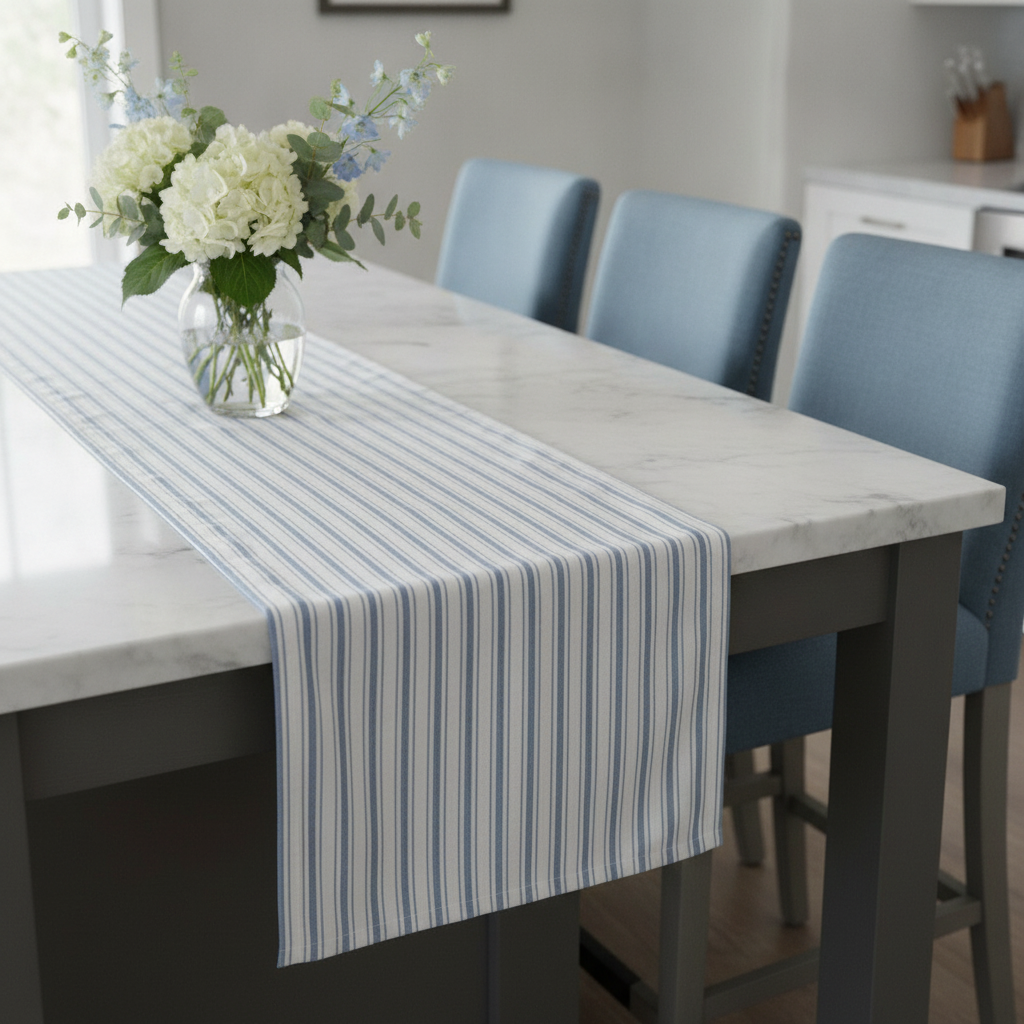
- **Second Use Idea:** This durable ticking stripe is ideal for simple, padded chair seats at a kitchen table, or for creating a traditional table runner that can extend over the edges of a 1.8m island by 15-30cm on each side, meaning a runner length of 2.1-2.4m and a width of 60-75cm.
Adding a Pop of Retro Character
Even in a vintage kitchen, a touch of playful modernism can prevent the space from feeling staid. The Retro Abstract Circles with Blue and Yellow on Light Background fabric introduces a bold abstract design featuring vibrant blue and yellow concentric circles set against a light background. This design, while retro, uses colors that blend seamlessly with a vintage blue palette.
- **Primary Use:** This vibrant fabric is excellent for creating a set of playful placemats or a custom notice board cover. For placemats, aim for a finished size of 35x45cm.
- **Second Use Idea:** Consider using this fabric as a backing for the interior of open shelving units, cut to fit the exact dimensions of each shelf back. It can also be used to line drawers or pantry shelves, adding an unexpected burst of color and pattern.
Comfort with Soft Blue Solids
To ground the patterns and introduce softness, incorporate a solid blue. The Illinois Soft Denim Blue Midwestern Ease fabric is a soft denim blue inspired by Illinois skies, lakes, and a relaxed style. Its calm and casual tone makes it versatile.
- **Primary Use:** This fabric is ideal for upholstery on a kitchen banquette or for recovering bar stool seats, providing comfort and a solid block of color. For a typical 1.5m banquette, you’d need approximately 3-4 meters of fabric, depending on cushion thickness and design.
- **Second Use Idea:** This soft denim blue is perfect for creating tailored kitchen towels with a minimalist feel, or for a simple valance above a sink window, cut to 30-45cm in depth.
DIY Project: Simple Fabric Placemats
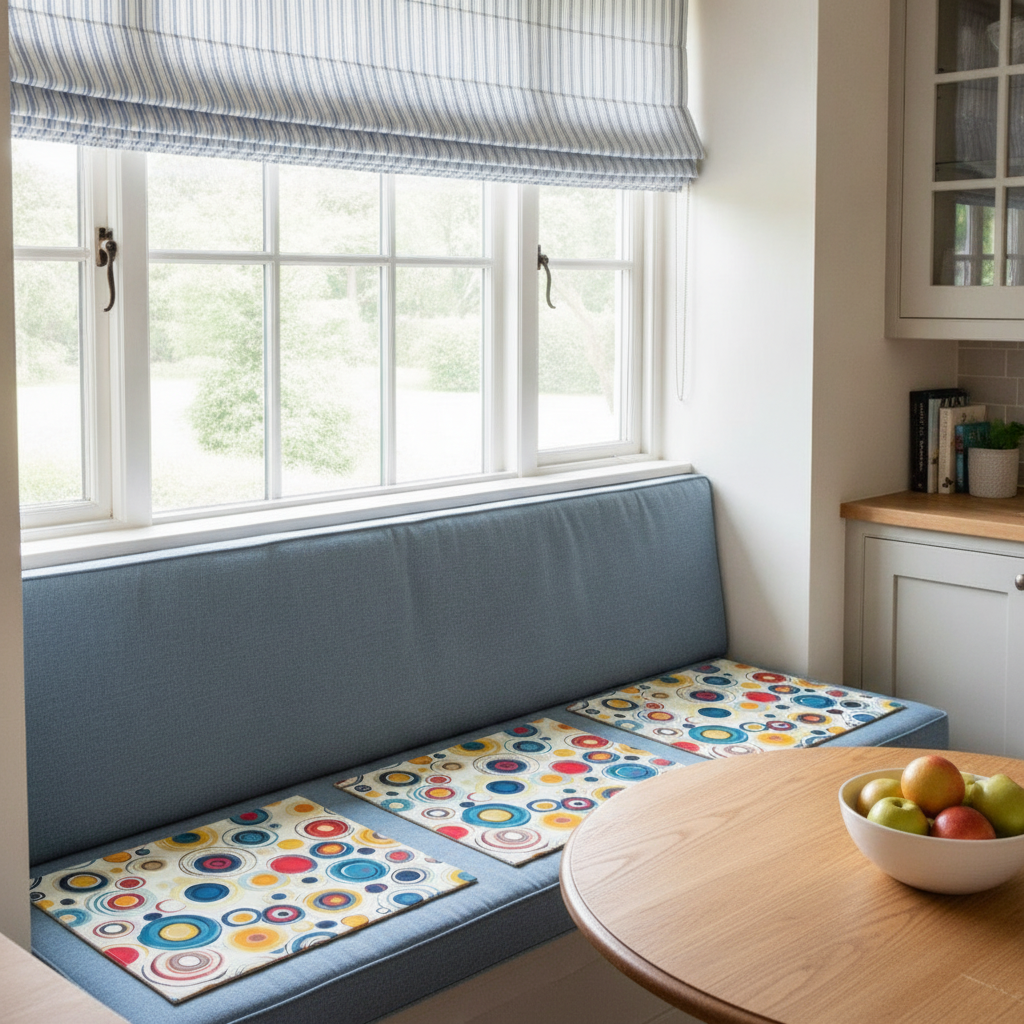
Adding custom placemats is an easy way to introduce pattern and protect your table. Here’s how to make four simple reversible placemats using your chosen fabrics, such as the Retro Abstract Circles with Blue and Yellow on Light Background and the Illinois Soft Denim Blue Midwestern Ease.
- **Gather Materials:** You will need approximately 1 meter of each chosen fabric (to make four 35x45cm placemats with some allowance), coordinating thread, a sewing machine, scissors or a rotary cutter, a ruler, and an iron.
- **Cut Fabric:** For each placemat, cut two pieces of fabric measuring 38cm x 48cm. This allows for a 1.5cm seam allowance on all sides for a finished size of 35x45cm.
- **Pin and Stitch:** Place one patterned fabric piece and one solid fabric piece right sides together. Pin along all four edges. Stitch around the perimeter with a 1.5cm seam allowance, leaving a 10cm opening on one long side for turning. Backstitch at the beginning and end of your stitching.
- **Trim Corners:** Clip the corners diagonally, being careful not to cut through your stitching. This reduces bulk.
- **Turn and Press:** Turn the placemat right side out through the opening. Use a blunt object, like a chopstick, to gently push out the corners. Press the entire placemat flat with an iron, ensuring the raw edges of the opening are neatly tucked in.
- **Topstitch:** Topstitch around all four edges of the placemat, about 0.5cm from the edge. This closes the opening and gives the placemat a crisp, finished look. Repeat for all four placemats.
What to Avoid
To maintain the integrity of your vintage blue kitchen, steer clear of a few common pitfalls:
- **Over-matching Blues:** While blue is your theme, using the exact same shade across every element (walls, cabinets, fabrics) can make the room feel flat and monolithic. Vary your blues with different tones – from sky blue to denim to deeper navy – for depth.
- **Shiny New Hardware:** Polished chrome or highly polished brass can instantly detract from a vintage feel. Opt for aged, brushed, or oil-rubbed finishes instead.
- **Clinical Lighting:** Harsh, cool-toned LED lighting can erase warmth. Choose lighting with a warmer color temperature (around 2700-3000K) and fixtures that complement your vintage style, such as milk glass pendants or industrial-inspired sconces.
- **Cluttered Countertops:** A vintage kitchen thrives on a sense of order and curated displays. Avoid leaving too many modern appliances or excessive clutter out. Store what you don’t use daily and display only items that enhance the vintage aesthetic, such as ceramic crocks or antique-style canisters.